Acromioclavicular joint injury is usually caused by direct injury to the acromion during a fall on an adducted arm. It is classified according to the Rockwood classification, which considers the extent of injury to the acromioclavicular (AC) ligament and the coracoclavicular (CC) ligament, as well as the displacement of the clavicle and type of dislocation in the AC joint. Patients present with local tenderness, swelling, limited range of motion, and/or deformity of the joint. X-ray is used to diagnose joint subluxation and clavicular displacement. Treatment is usually conservative and may include rest and analgesia for a few weeks. Surgery is recommended for more severe injuries when ligament repair is required.
- Most common: direct force injury to the superior aspect of the acromion while the arm is adducted (e.g., a fall while cycling or riding a horse)
- Less common: indirect injury via falling on an outstretched hand, which transmits force up the arm through the humerus to the acromion, causing displacement that distresses the AC ligaments
- Local tenderness, swelling, and/or bruising
- Pain is elicited by the cross-body adduction test, in which the patient elevates their arm to 90° and actively adducts it across their body.
- Limited range of motion of the shoulder joint
- Visible deformity of the lateral aspect of the clavicle may be seen in types III and above
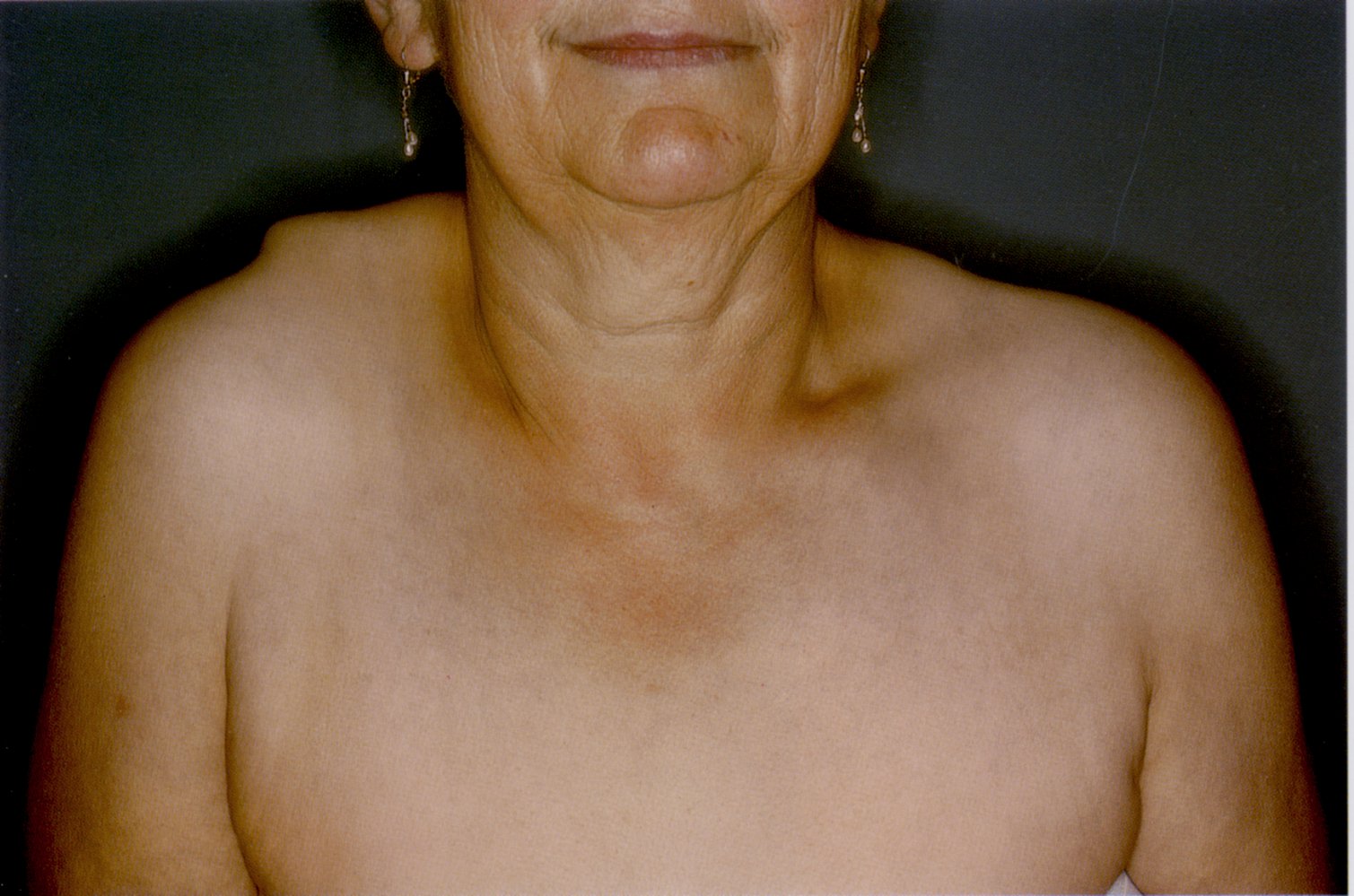
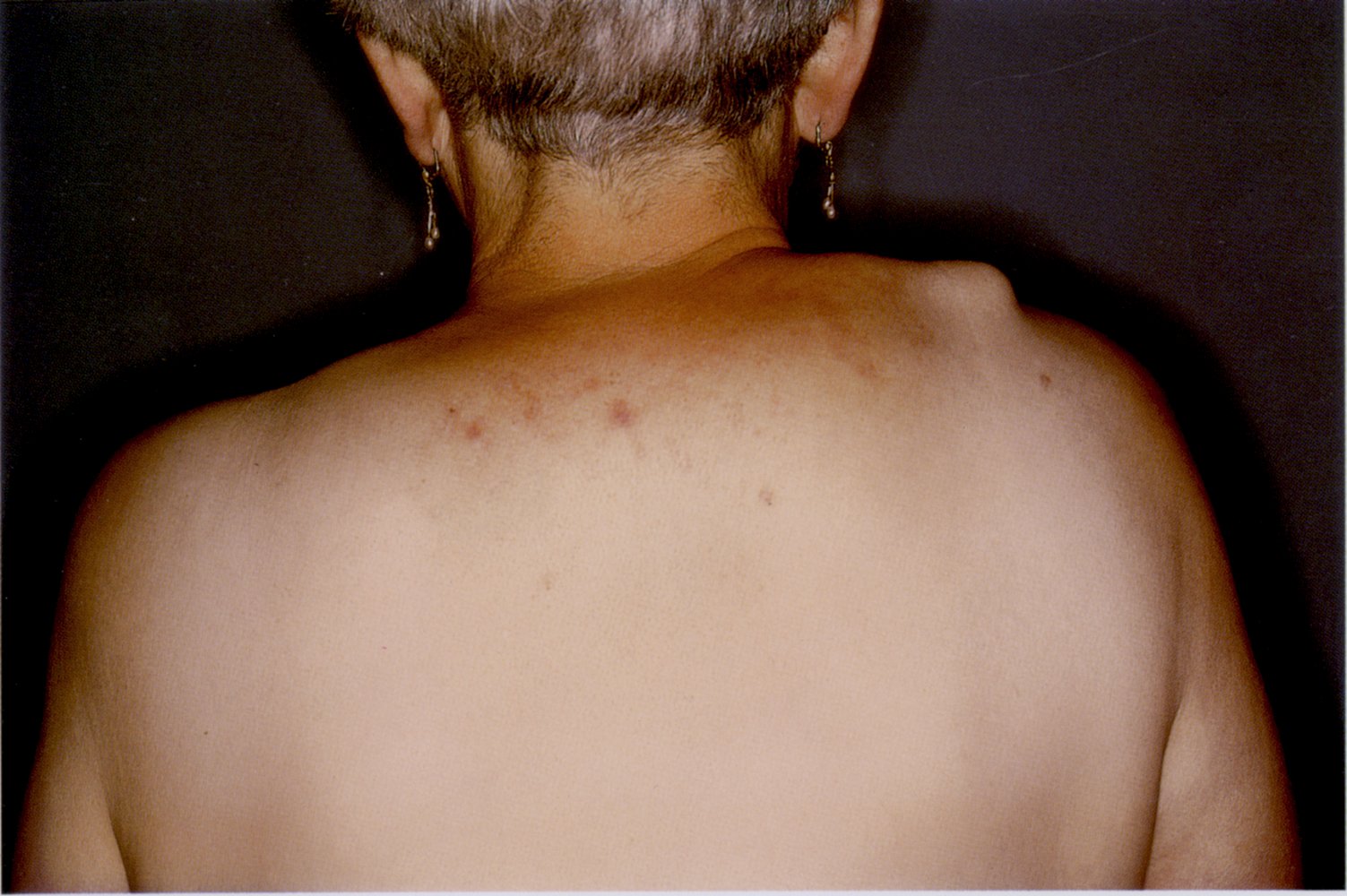
References:[1]
- Approach: AC joint injury is a clinical diagnosis that can be classified according to the Rockwood classification via x-ray. If x-ray findings are questionable, an MRI, CT, or possibly ultrasound may be considered.
- Classification
| Rockwood classification of AC joint injury | |||||
|---|---|---|---|---|---|
| Injury type | AC ligament | Joint capsule | CC ligament | Distal clavicle | Deltoid and trapezius muscles |
| Type I |
|
|
|
|
|
| Type II |
|
|
|
|
|
| Type III |
|
|
|
||
| Type IV |
|
|
|
||
| Type V |
|
|
|
||
| Type VI (rare) |
|
|
|
||
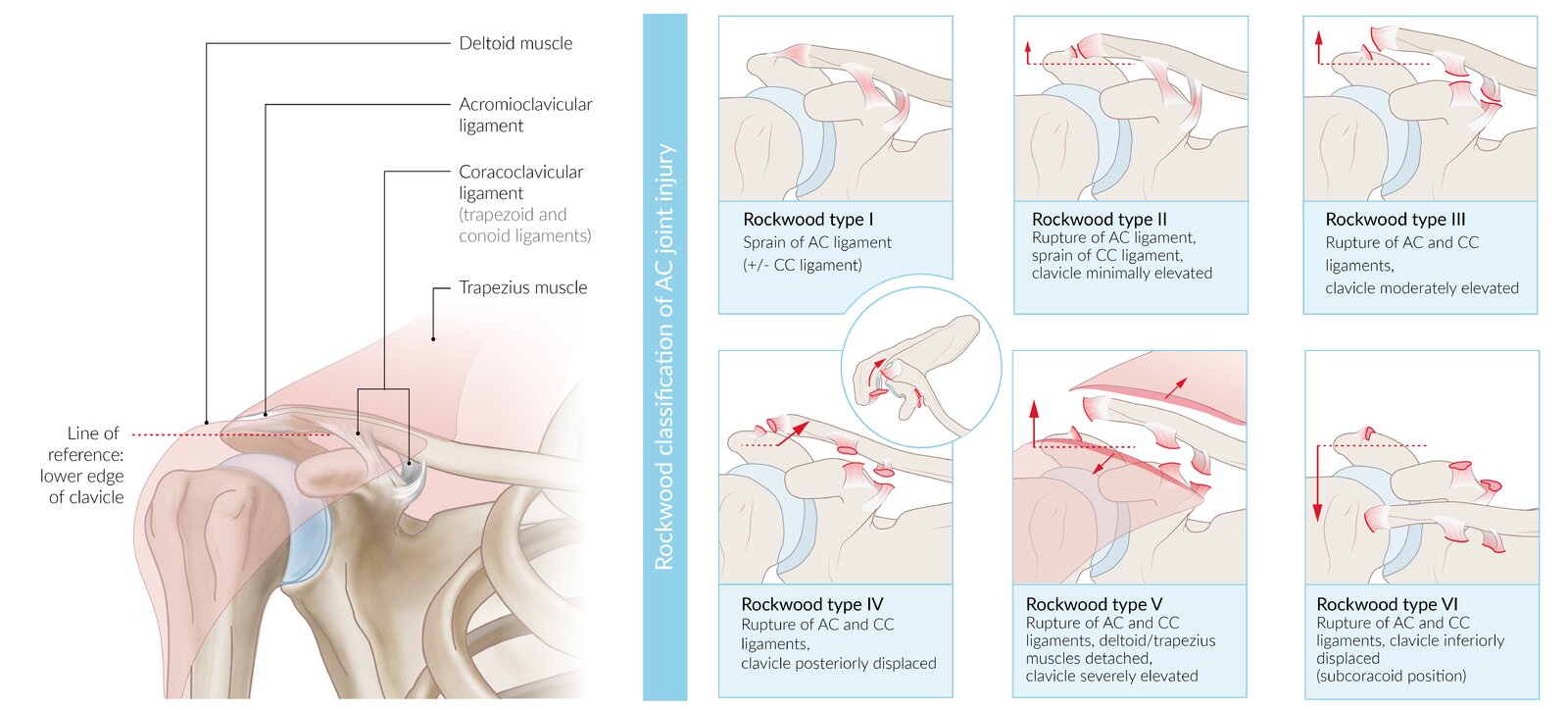
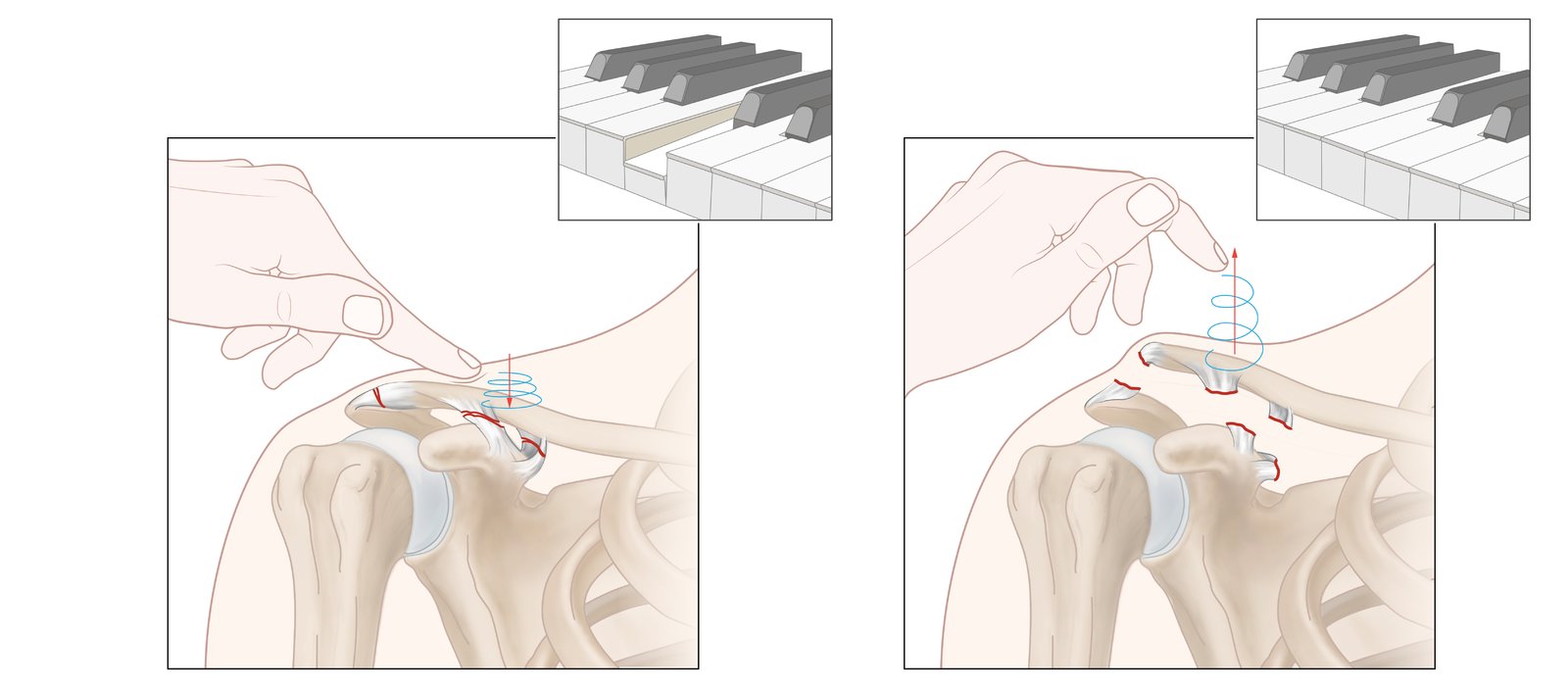
-
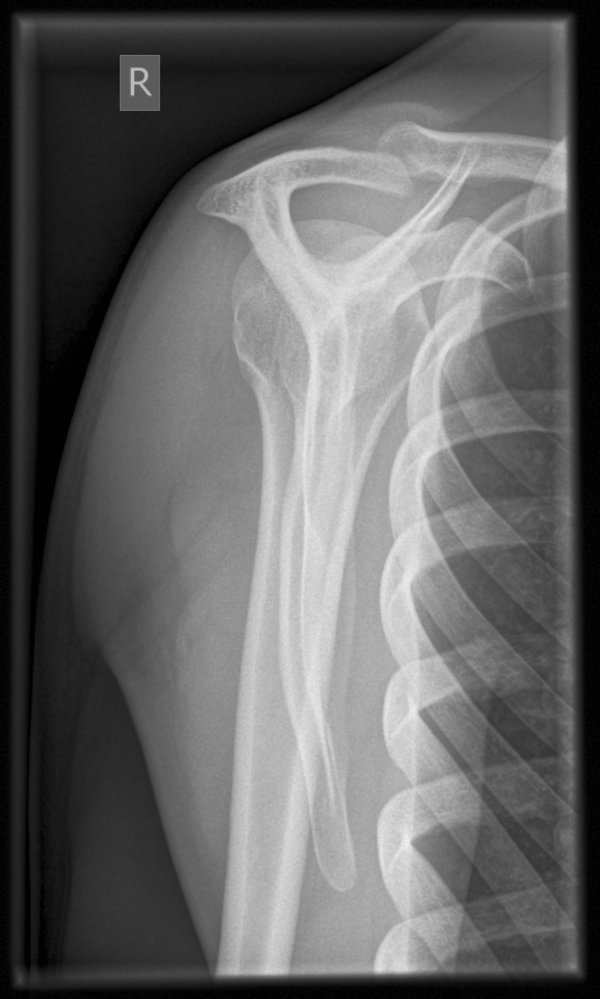
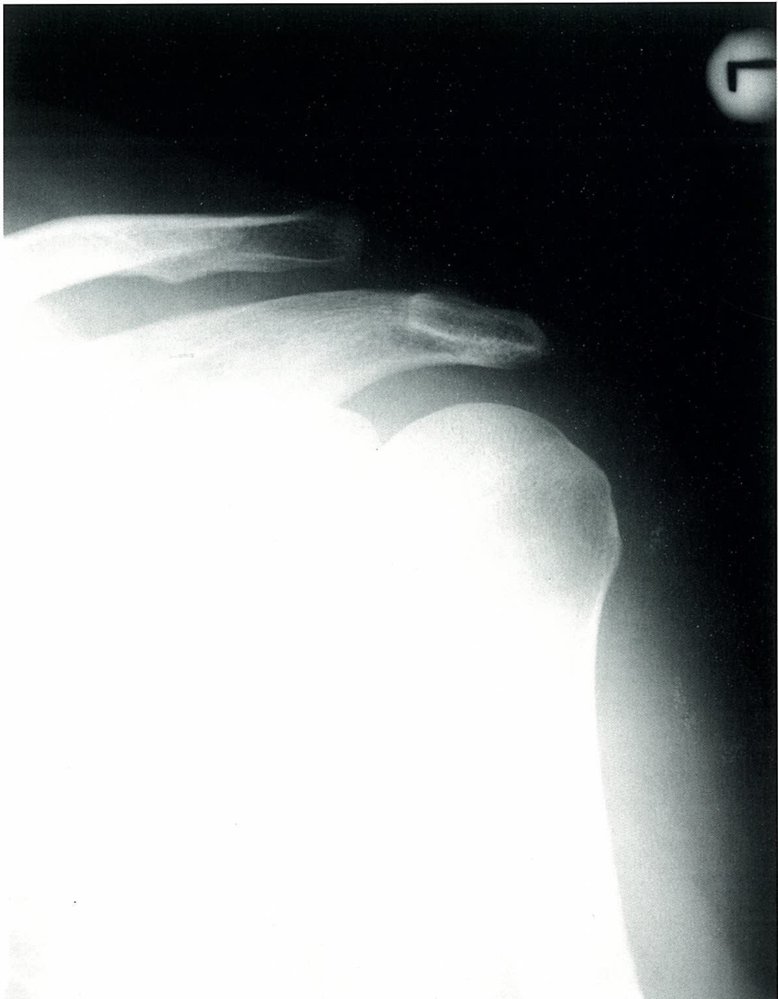
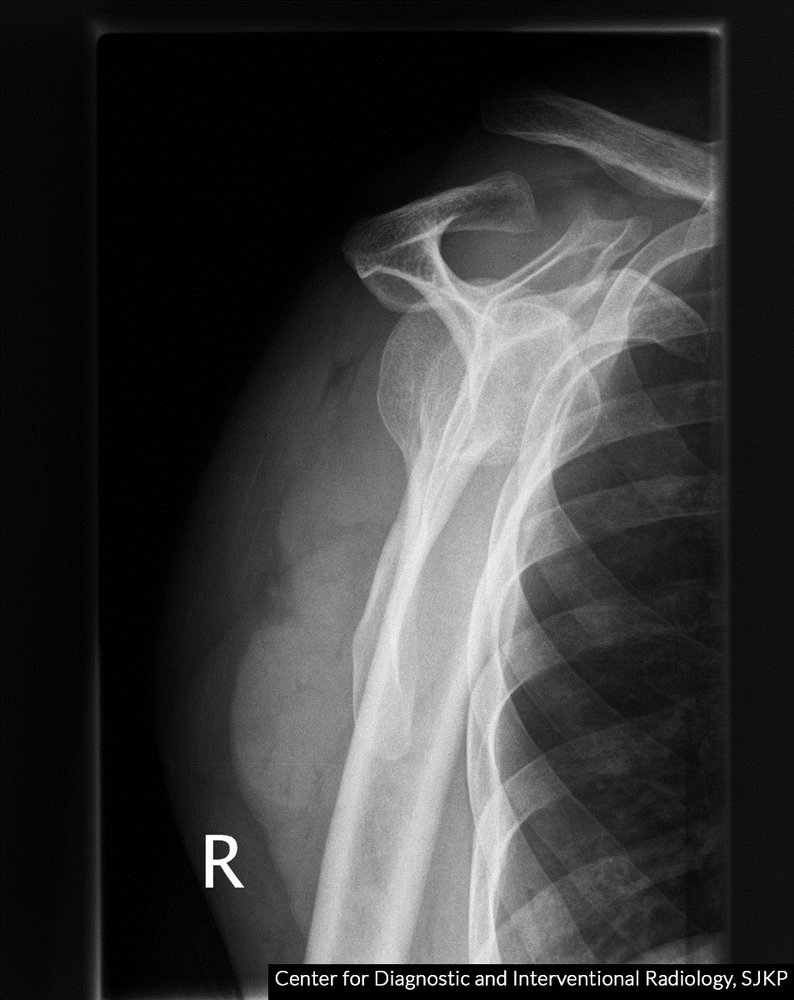
X-ray (anterior-posterior view, oblique view, axillary view) of the shoulder joint, acromion, and scapula:
- Subluxation of the AC joint space
- Widening of the CC space
- Displacement of the clavicle
- Accompanying injuries (e.g., clavicle fracture)
- Chronic cases: features of AC arthritis, distal clavicle osteolysis
References:[2][3][4][5]
Acute management
Conservative treatment
- Indications: types I and II
-
Methods
- Sling for comfort: 1–3 weeks (e.g., Desault or Gilchrist bandage)
- Avoid heavy lifting
- Analgesia (e.g., NSAIDs)
Surgical treatment
-
Indications
-
Types III and above
- Management of type III is controversial and determined on an individual basis
- All patients with type III and above should be referred to an orthopedist
- Open fractures
- Neurovascular injury
- Failed conservative treatment
-
Types III and above
- Objective: ligament repair and reconstruction
-
Methods
- Arthroscopic (all or assisted): preferred as less invasive
- Open surgery
Long-term management
-
Indications
- Persistent pain after healing of initial ligamentous injury
- Repeated minor injury without instability but persistent AC joint arthralgia
-
Methods
- Avoiding painful movement and analgesia
- Intraarticular glucocorticoid injections
References: [1][2]
- See complications of fractures.
- Brachial plexus injury (rare)
- Chronic pain
We list the most important complications. The selection is not exhaustive.