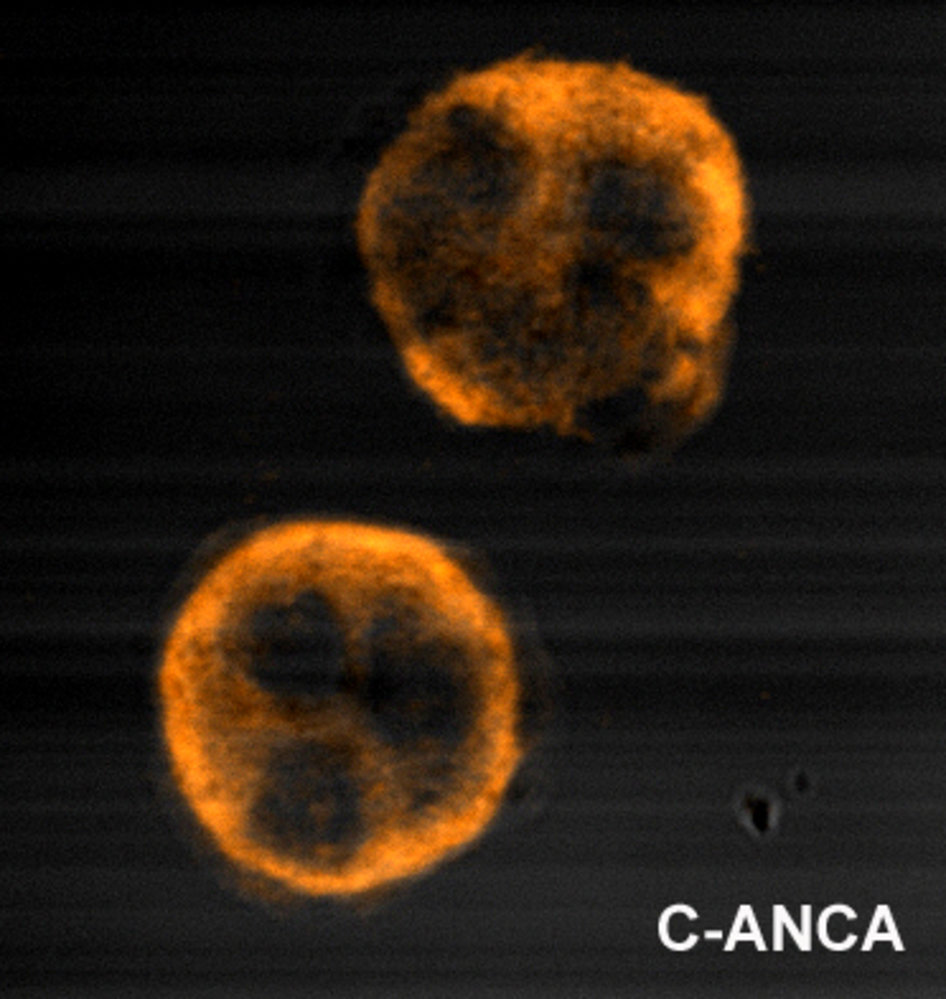
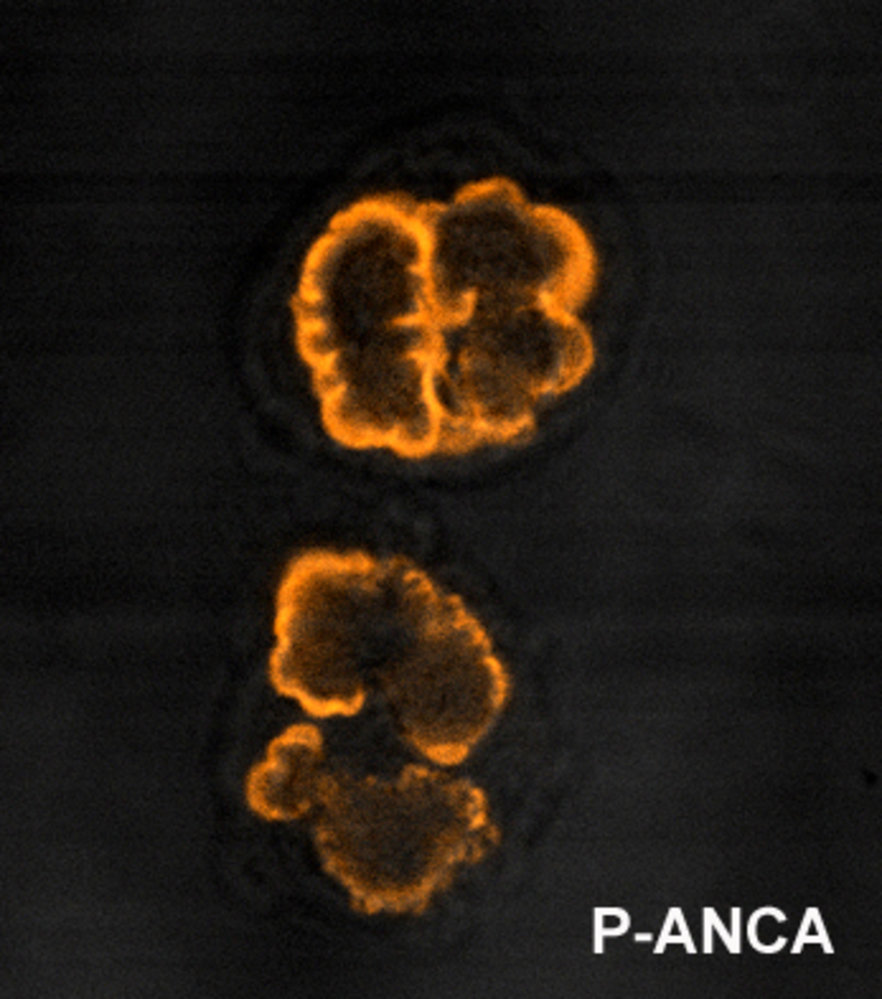
Antibody diagnostics play a vital role in the differential diagnosis of rheumatic diseases. Many of these autoantibodies can be differentiated into antibodies against nuclear antigens (ANAs) and antibodies against cytoplasmic antigens (ANCAs). Although both of these antibodies are detectable in numerous autoimmune diseases, elevated ANAs are typical for connective tissue diseases and elevated ANCAs for vasculitis. Diagnosis of individual conditions can be further supported by detecting disease-specific ANAs or ANCAs, such as anti-dsDNA in systemic lupus erythematosus or c-ANCA in granulomatosis with polyangiitis.
-
Brief description
- ANAs comprise numerous antibodies against specific nuclear antigens.
- In addition, ANAs include autoantibodies against DNA and histones.
-
Assessment
- Elevated ANA levels are observed in various autoimmune diseases, especially in the diseases listed below.
- An increase is typically observed in connective tissue diseases, but may also be found in, e.g., rheumatoid arthritis (RA), autoimmune hepatitis, and vasculitides.
- In general, elevated ANA levels are considered nonspecific; exact diagnosis requires determination of individual antibodies.
| Overview of ANAs | ||
|---|---|---|
| Connective tissue diseases | Antigen-specific ANAs | Other autoantibodies |
| Systemic lupus erythematosus (SLE) |
|
|
| Systemic sclerosis (scleroderma) |
|
|
| Sjögren syndrome |
|
|
| Polymyositis and dermatomyositis |
|
|
| Mixed connective tissue disease |
|
|
References:[1][2]
- Description: ANCAs comprise antibodies against specific cytoplasmic antigens
-
Assessment
- An increase is observed in various autoimmune diseases, especially vasculitides
- Atypical fluorescence patterns of p-ANCA (perinuclear ANCA) also play an important role in the diagnosis of primary sclerosing cholangitis (PSC).
| Specific ANCA | Diseases |
|---|---|
|
c-ANCA (Proteinase-3antibody) |
|
|
p-ANCA (Myeloperoxidase antibody) |
|
| atypical p-ANCA |
|