To see contributor disclosures related to this article, hover over this reference: [1]
Physicians may earn CME/MOC credit by reading information in this article to address a clinical question, and then completing a brief evaluation, in which they will identify their question and report the impact of any information learned on their clinical practice.
AMBOSS designates this Internet point-of-care activity for a maximum of 0.5 AMA PRA Category 1 Credit(s)™. Physicians should claim only credit commensurate with the extent of their participation in the activity.
For answers to questions about AMBOSS CME, including how to redeem CME/MOC credit, see "Tips and Links" at the bottom of this article.
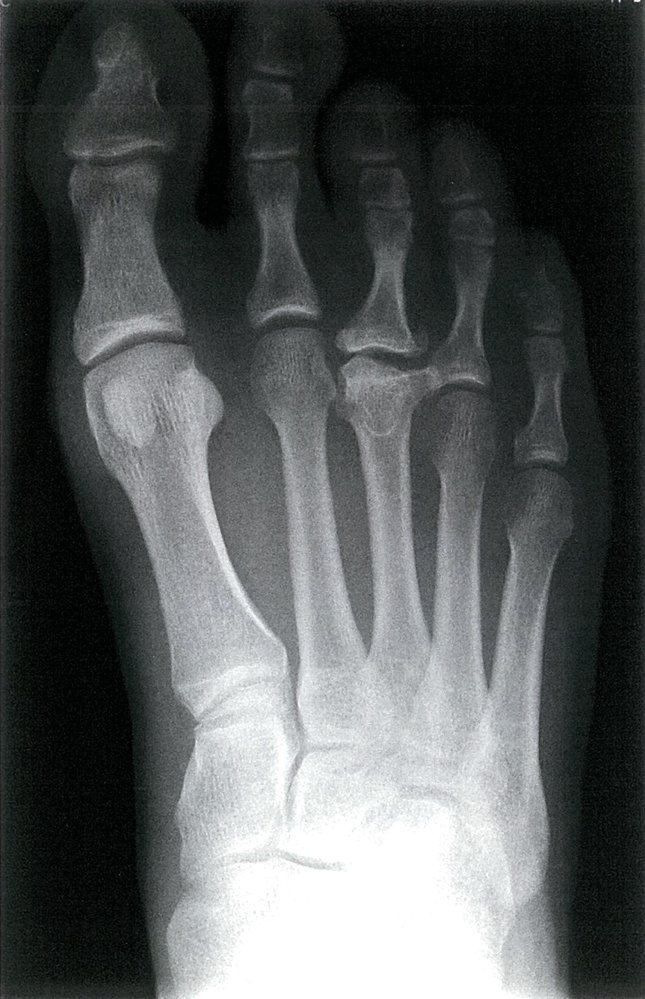
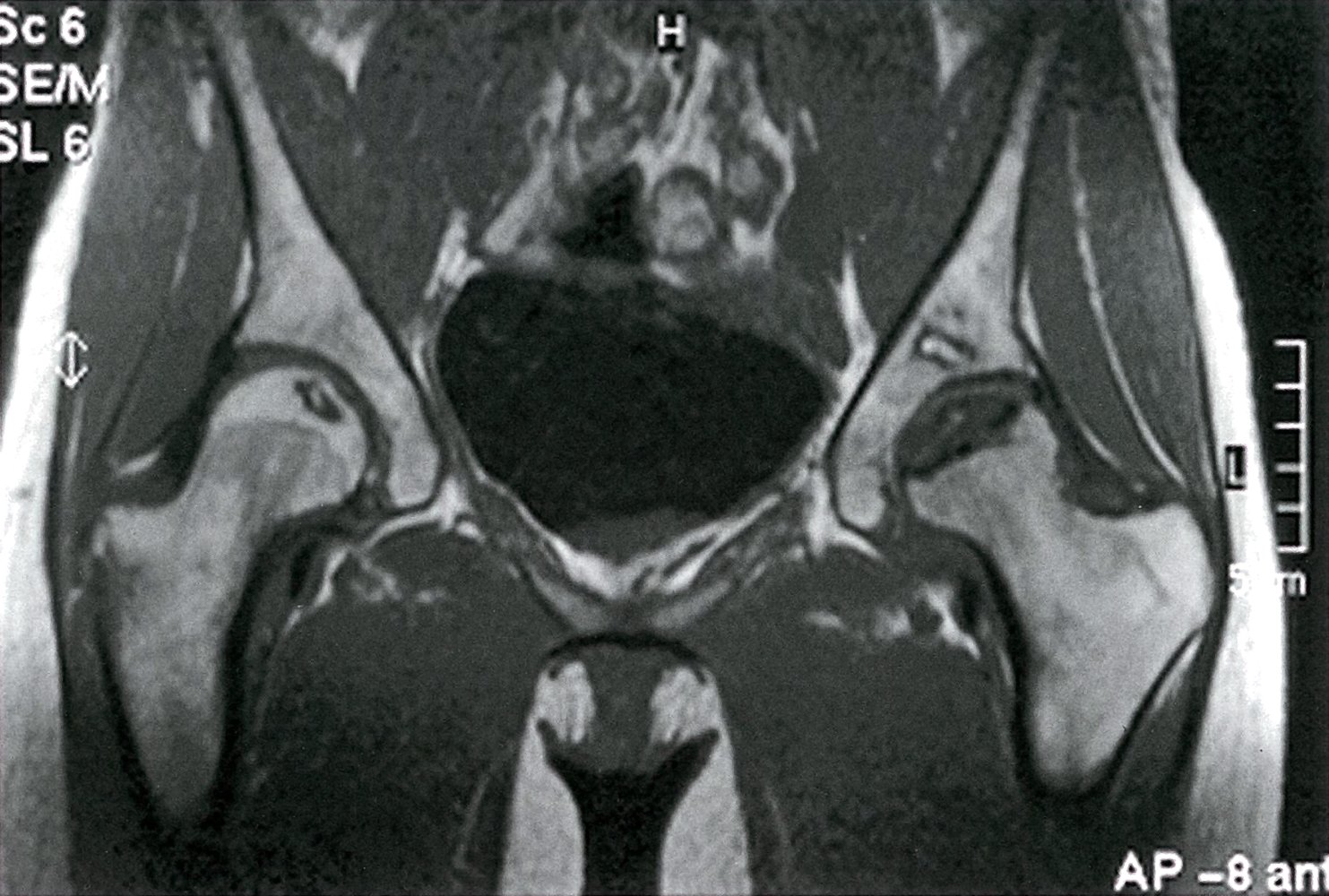
Avascular necrosis is a condition in which bone tissue becomes ischemic and begins to suffer pathologic decomposition, leading to joint dysfunction. Avascular necrosis (AVN) affects all age groups and is caused by direct trauma, medications, cellular insult, or mechanical compression, often in the context of predisposing conditions. Susceptible joints include the hip, knee, shoulder, wrist, and ankle. Disease type is typically characterized by location, often with eponymous names. Joint movement is decreased and pain is localized to the affected joint. Patients may be asymptomatic in early stages. X-ray is used for initial imaging, and MRI is required for definitive diagnosis. Management is typically surgical and may include total joint replacement in later stages.
For management specific to avascular necrosis of the hip, see “Osteonecrosis of the femoral head.”
Affected structures [2][3][4]
The bone tissue ischemia and necrosis characteristic of AVN most commonly affect the epiphysis of long bones.
- Hip: femoral head (most common); see also “Osteonecrosis of the femoral head.”
- Knee: medial femoral condyle
- Ankle: talar neck
- Shoulder: humeral head
- Wrist: scaphoid, lunate, capitate
Specific types of avascular necrosis
| Overview of special types of avascular necrosis | ||||
|---|---|---|---|---|
| Condition | Localization | Epidemiology | Etiology | Clinical features |
| Kienbock disease |
|
|
|
|
| Legg-Calvé-Perthes disease |
|
|
|
|
| Kohler disease |
|
|
|
|
| Freiberg disease |
|
|
|
|
- Trauma (e.g., proximal scaphoid fractures)
- Cellular toxicity (e.g., chemotherapy, radiotherapy, thermal injury, smoking, alcohol)
- Medication (e.g., corticosteroids)
- Congenital disease (e.g., sickle cell disease, Gaucher disease)
- Orthopedic conditions (e.g., slipped capital femoral epiphysis, developmental dysplasia of the hip)
- Intraosseous compression (e.g., hemorrhage, elevated bone marrow pressure)
- Early stage: usually asymptomatic [5]
- Advanced stage: limited movement, pain, and/or swelling in the affected joint [6][7]
- Clinical evaluation: history of trauma, glucocorticoid use, or other risk factors for AVN
-
X-ray [2][6][8]
- First line to rule out acute fracture; may be nondiagnostic in early stages
- Findings include subchondral fracture, sclerosis, cystic changes, and bone collapse.
-
MRI without contrast [6][8]
- Gold standard(highly sensitive) [2]
- Findings depend on the stage and the bone affected.
Glucocorticoid use and chronic heavy drinking are the most common causes of nontraumatic avascular necrosis. [5]

Treatment varies depending on location and stage of disease; refer to orthopedics for management as surgery is often required for definitive treatment. See also “Treatment of AVN of the femoral head.” [5]
-
Treatment goals [5][6]
- Preventing bone collapse, long-term disability, and chronic pain
- Preserving joint function
-
Nonoperative management: for early stages and/or symptomatic relief [5]
- Reduce weight-bearing on the joint.
- Pain management
- Risk factor reduction, e.g. smoking cessation
- Physiotherapy
-
Surgical treatment
-
Core decompression
- Operative decompression of the affected bone to restore perfusion
- May be indicated in early stages [9]
- Bone graft
- Joint replacement (e.g., hip, shoulder, knee)
-
Core decompression
Early detection and prompt treatment significantly improve prognosis. [5]