Carcinoid syndrome is a paraneoplastic condition caused by intermittent secretion of serotonin and other vasoactive substances (e.g., kallikrein, histamine) by neuroendocrine neoplasms (NENs). It is primarily associated with metastatic well-differentiated NENs, i.e., neuroendocrine tumors (NETs), in the gastrointestinal tract. Symptoms include episodic cutaneous flushing, diarrhea, abdominal pain, and wheezing. In advanced cases, manifestations can include pellagra, mesenteric fibrosis, and cardiac valvular fibrosis (particularly affecting the right heart). Elevated urinary 5-hydroxyindoleacetic acid (5-HIAA) levels confirm the diagnosis. Imaging (e.g., CT, MRI, PET/CT) is used for locating tumors and staging. Somatostatin analogues (e.g., octreotide) are first-line treatments. Carcinoid crisis is a potentially life-threatening complication that is typically triggered by general anesthesia and/or perioperative manipulation of the NEN due to an efflux of vasoactive substances; prevention involves perioperative somatostatin analogue infusion.
- Incidence: 2.7 per 1,000,000 population per year [1]
- ♀ = ♂
- Highest in African-American individuals
Epidemiological data refers to the US, unless otherwise specified.
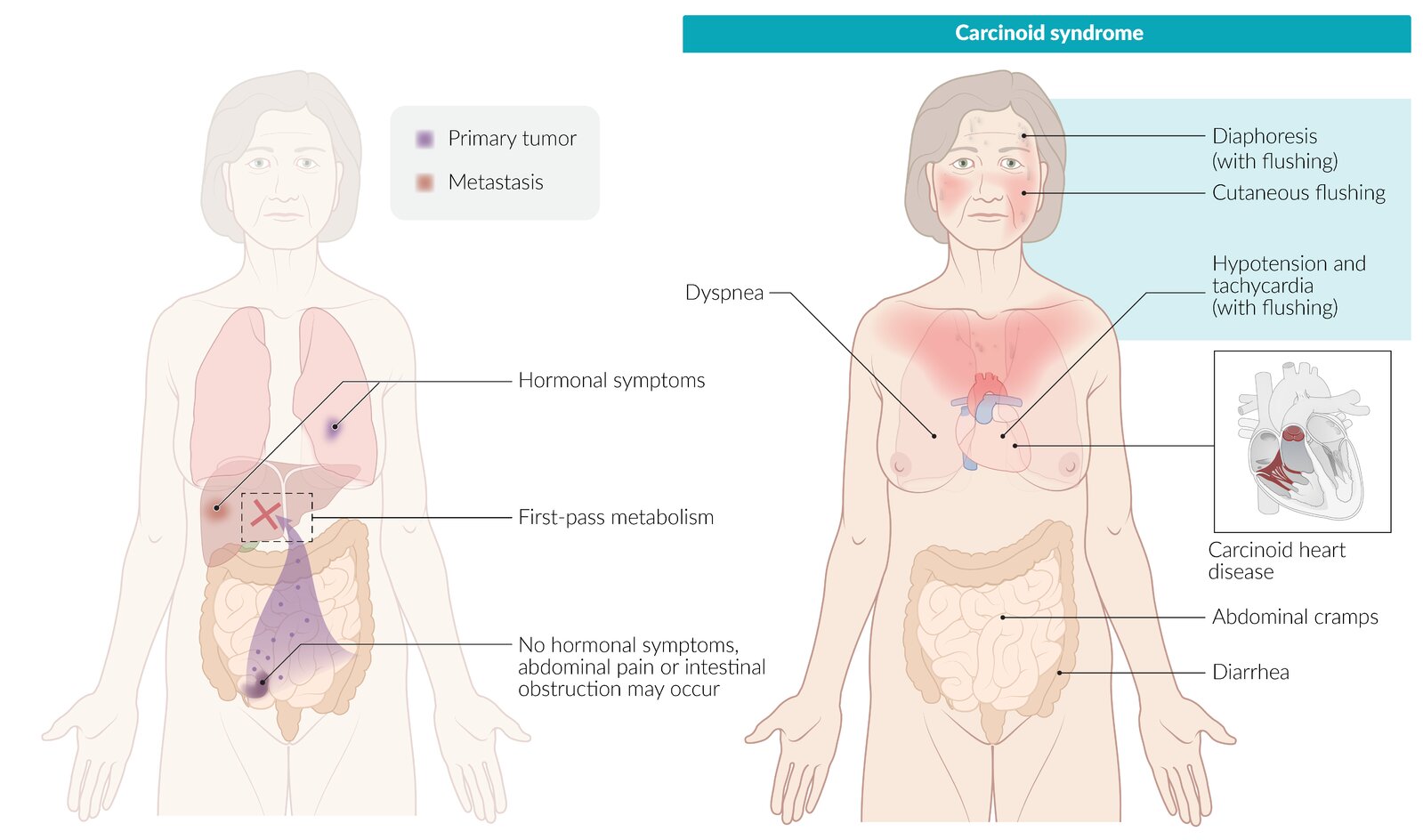
Carcinoid syndrome is a paraneoplastic condition caused by excess production, storage, and systemic circulation of multiple different hormones synthesized by certain metabolically active NENs. [1][2][3]
-
Serotonin (most prominent) [1]
-
Release downstream of sites of serotonin metabolism (liver or lungs), e.g., due to:
- Intestinal NENs that have metastasized to the liver (most common) [4]
- Extraintestinal NENs (e.g., ovarian or bronchial tumors)
-
Effects of serotonin excess
- ↑ Gut peristalsis and intestinal fluid secretion → secretory diarrhea
- ↑ Fibroblast growth and fibrogenesis → carcinoid heart disease, retroperitoneal fibrosis, and/or mesentericfibrosis
- Depletion of tryptophan (precursor of serotonin and niacin) → ↓ protein synthesis, hypoalbuminemia, and/or niacin deficiency due to increased serotonin metabolism [2]
-
Release downstream of sites of serotonin metabolism (liver or lungs), e.g., due to:
- ∼ 40 additional vasoactive substances (e.g., histamine, prostaglandins, tachykinins, kallikrein) → vasodilation → cutaneous flushing [1]
Serotonin is degraded via first-pass metabolism in the liver and by monoamine oxidases in the lungs.
Carcinoid syndrome is caused by intermittent secretion of serotonin and other vasoactive substances by NENs. [1][3]
-
Cutaneous flushing: pink or red discoloration, especially on the face, neck, and chest ; [1]
- Onset: sudden and often multiple episodes a day
- Typical duration: a few minutes
- Triggers include alcohol, physical exertion, and tyramine-containing foods (e.g., chocolate)
- Diarrhea (usually secretory)
- Abdominal pain (e.g., due to mass effect from the tumor or complications of mesentericfibrosis)
- Dyspnea, wheezing
- Diaphoresis
- Hypotension
-
Carcinoid heart disease: cardiac fibrosis due to chronic excess circulating serotonin [5]
- Endocardial fibrosis, especially affecting the right heart
- Tricuspid insufficiency and/or pulmonary stenosis
- Features of right-sided heart failure
Consider carcinoid syndrome and workup for a NEN in patients presenting with secretory diarrhea, episodic flushing, wheezing, and right-sided cardiac valvular abnormalities.
Biochemical testing [1]
The following studies can be used to diagnose carcinoid syndrome and/or monitor disease progression in consultation with a specialist (e.g., endocrinologist).
- ↑ 5-Hydroxyindoleacetic acid (5-HIAA) on 24-hour urine collection (first-line study) [1][6]
- ↑ Fasting plasma 5-HIAA levels: alternative to urinary 5-HIAA levels
- ↑ Serum chromogranin A levels: for monitoring disease progression
- NT-proBNP: to screen for carcinoid heart disease [3]
Imaging [1][7]
Imaging studies are used to locate primary and metastatic NENs.
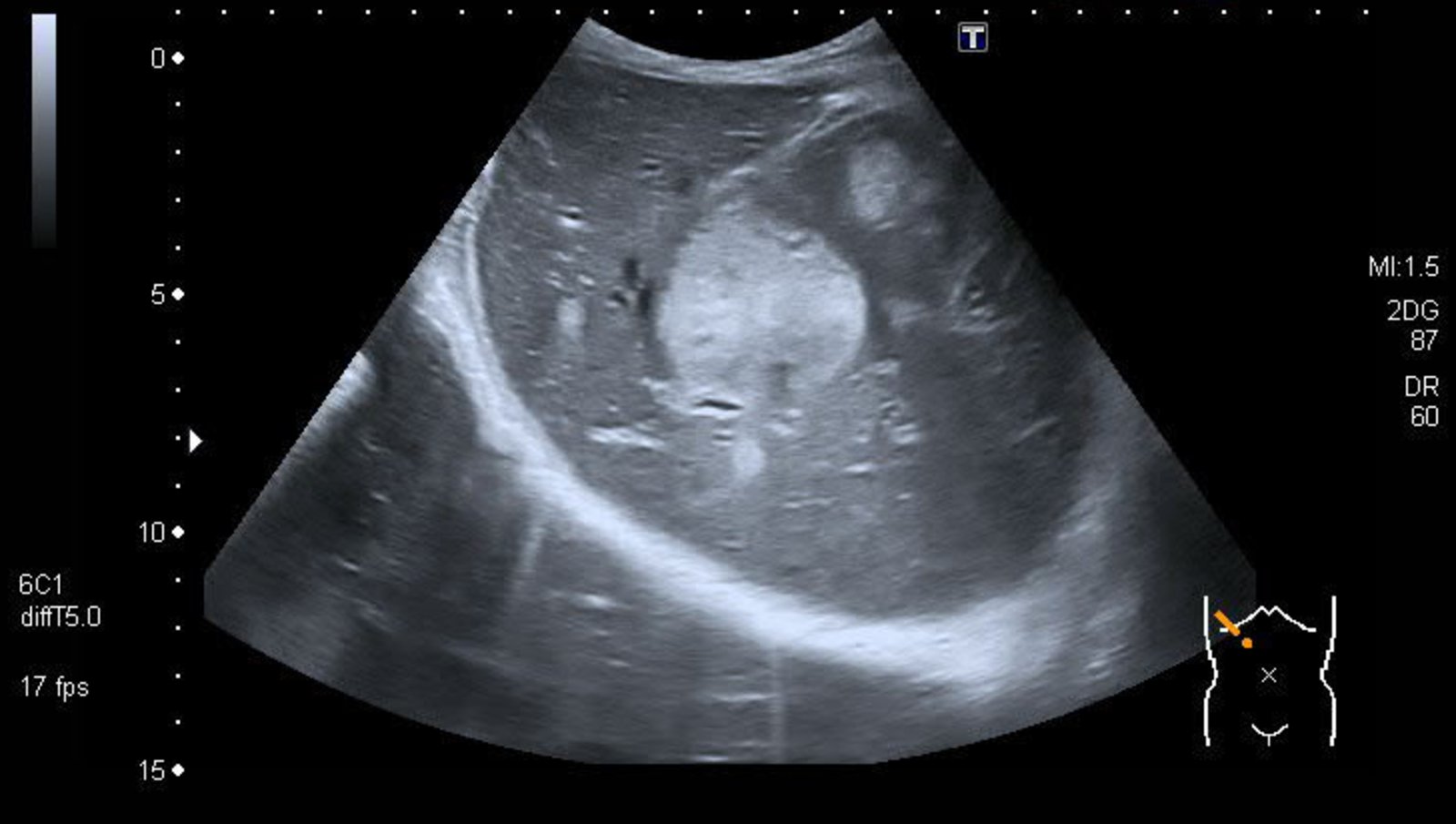
- Abdominal imaging, e.g., CT, MRI, or ultrasound
- Somatostatin receptor PET/CT, e.g., using Gallium-68 DOTATATE
- Chest x-ray: if there is suspicion for a bronchial or thymic tumor
-
TTE: to evaluate for carcinoid heart disease
- At diagnosis for patients with suggestive findings
- Annually for patients with 5-HIAA levels > 5× ULN [8]
- Angioedema
- Anaphylaxis
- Anxiety
- Hot flashes
- Aldehyde dehydrogenase 2 deficiency
- Laxative misuse
- See also “Differential diagnoses of diarrhea.”
| Endocrine differential diagnoses of carcinoid syndrome | ||||
|---|---|---|---|---|
| Blood glucose | Diarrhea | Associated genetic syndromes | Other findings | |
| Carcinoid syndrome [3][9] |
|
|
|
|
| Zollinger-Ellison syndrome [10] |
|
|
|
|
| VIPoma [11] |
|
|
|
|
| Pheochromocytoma [4][9] |
|
|
|
|
| Medullary thyroid carcinoma [12] |
|
|
|
|
| Mastocytosis [13] |
|
|
|
|
| Hyperthyroidism [4] |
|
|
|
|
The differential diagnoses listed here are not exhaustive.
Treatment of carcinoid syndrome should be guided by appropriate specialists (e.g., oncology, gastroenterology) and includes both symptomatic management and treatment of the causative neuroendocrine neoplasm.
Pharmacological treatment [1][7]
- Somatostatin analogues (e.g., octreotide): first-line treatment for symptom control
- Telotristat: a tryptophan hydroxylase inhibitor used as an adjunct to treat carcinoid syndrome diarrhea that does not respond to somatostatin analogues alone
- Antidiarrheal agents (e.g., loperamide) and/or anticholinergics (e.g., diphenoxylate/atropine): Consider depending on the cause of diarrhea.
- Interferon alpha: for symptoms refractory to somatostatin analogues
- Antineoplastic agents: may be effective for high-grade NENs
- Radiolabeled somatostatin analogues: targeted radiotherapy for selected patients
Surgery and interventional treatment [1][7]
- Cytoreductive surgery
- Hepatic resection
- Embolization therapy for liver tumors
- Ablative therapy (e.g., radiofrequency ablation)
Carcinoid crisis [1][7]
- Definition: a potentially life-threatening efflux of vasoactive substances (predominantly serotonin) from a NEN
- Triggers: perioperative tumor manipulation (e.g., during surgery, biopsy), general anesthesia
-
Clinical features
- Severe and/or refractory carcinoid syndrome
- Labile blood pressure with profound hypotension and hypertension
- Multi-organ failure
-
Management [14][15]
- Treat distributive shock with immediate hemodynamic support.
- Add a somatostatin analogue (e.g., octreotide).
- Prophylaxis: periprocedural infusion of a somatostatin analogue
Long-term complications [1]
- Complications of retroperitoneal or mesenteric fibrosis, e.g.:
- Intra-abdominal vessel ischemia
- Intestinal obstruction
- Ureteral obstruction
- Carcinoid heart disease
We list the most important complications. The selection is not exhaustive.